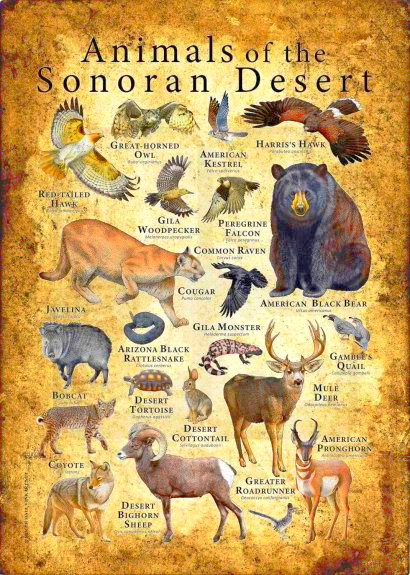
There are a lot of animals in the Sonoran Desert around here. Here are some interesting facts about a couple of those animals.
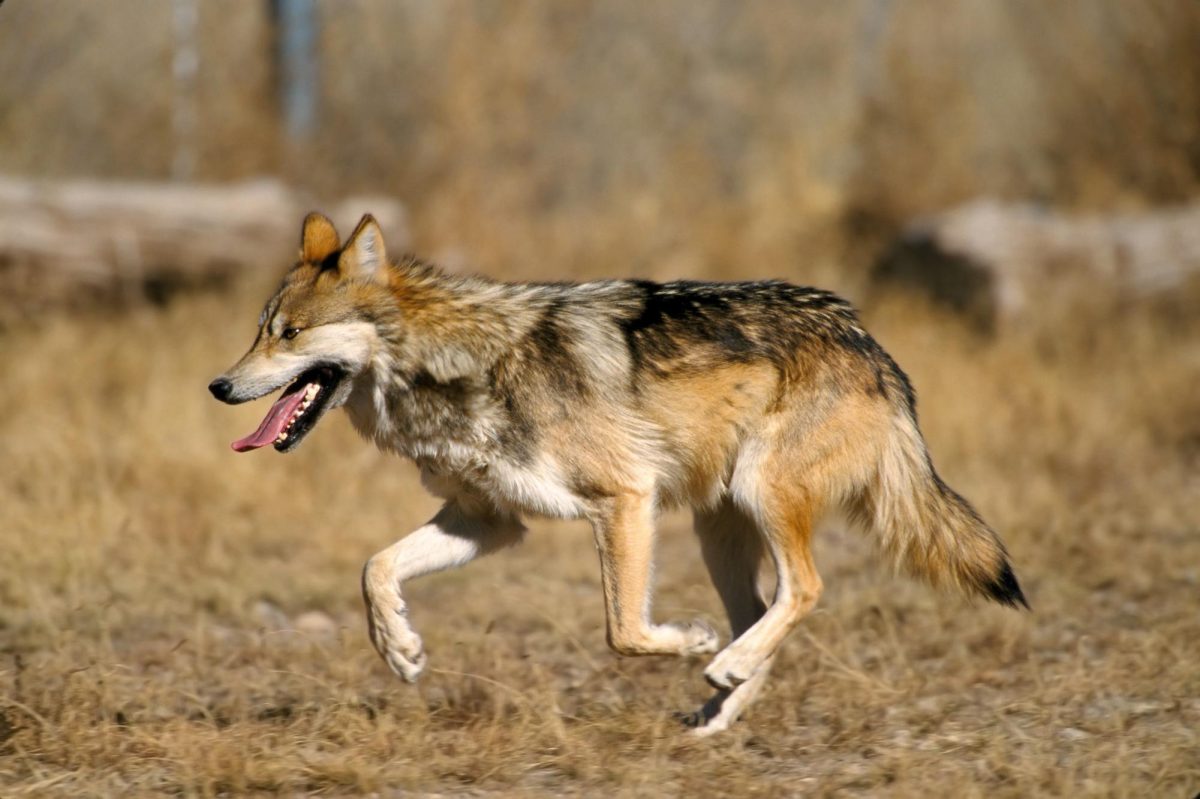
The first animal I want to talk about is the Mexican Gray Wolf. According to fws.gov, the Mexican Gray Wolf is a subgroup of the gray wolf. It lives in parts of Arizona, New Mexico, and the northern half of Mexico. In the 1900’s, the Mexican wolf had a much larger population, living from the southern part of California all the way to the western part of Texas. The Mexican wolf probably came from the earliest types of gray wolves. The Mexican wolf was once treated with respect by the early culture of Mexico, but later, people started hunting, trapping, and poisoning them, and by the mid-1900’s, the Mexican wolf was gone from the wild. After they were protected by the United States and Mexico, the Mexican wolves were brought into captivity in 1976. Soon, in 1998, they were released back into the wild by the U.S. and Mexico to help rebuild the population.
The second animal I want to talk about is the Javelina. According to DesertMuseum.org, these animals are often confused with pigs. That’s easy to understand because their noses are similar to a pig’s, they have long teeth similar to a pig’s, and their legs are as short as a pig’s. But they aren’t actually very closely related to each other. Javelinas live in the Western Hemisphere of the world, and pigs live in the Eastern Hemisphere of the world. These species have been apart for millions of years. Another name for Javelina is collared peccary because they have a light ring around their necks and their shoulders. While they mainly live in large groups of family, the young males wander around by themselves. Javelinas are easy to tell if they have been nearby due to their strong aroma. They give off musk from a gland close to their rear, and different members of the family rub against each other’s glands. Since javelinas don’t have good eyesight, the family’s smell helps them know where they all are and stay together. Javelinas usually eat plants, like prickly pear cactus fruit and pads, mesquite beans, agave, shrubs, grass, and plant roots. But sometimes, they’ll also eat things like lizards, dead birds, and rats.
Another animal I want to talk about is the Bobcat. According to azgf.org, Bobcats are carnivores, which means they only eat meat, mainly mice, squirrels, birds, deer, and pronghorns. Bobcats are twice as large as an average house cat, and their most distinguishing part is it’s short, bobbed tail, which has white fur on the bottom and a black tip. Bobcats are able to jump at 12 feet into the air to get food, like squirrels and birds. Bobcats can run up to 30 miles per hour. Bobcats scream at night to try and attract mates and keep their home safe from intruders, usually in the early springtime, around February or March. These screams sound an awful lot like babies. They are excellent climbers, usually resting on low parts of trees, and are very good swimmers, even though they usually avoid water. Bobcats live 10-12 years in the wild. Bobcats grow to be at least 4-8 inches long, with a size of 2 to 3 feet, and a weight of around 12-30 Ibs.
The last animal I want to talk about is the Gila Monster. According to nps.gov, the Gila Monster is the largest lizard in North America. It grows to a length of 22 inches and weighs over a pound. It is one of the only two venomous lizards in the United States, the other being the Beaded Lizard, a close relative of the Gila Monster. While it is one of the well-known and widely discussed species, it is one of the rarest species to be found in the Sonoran Desert. Gila Monsters are usually active in the early parts of the morning or late in the afternoon, but they can be found shortly after the sun sets, mainly during the hottest weather in the desert. They are usually found and seen from March to June, but they may also be seen in other places if they don’t like the weather or temperature.
There are a lot of different and interesting desert creatures! Some, like Gila Monsters, you won’t find anywhere else in the world! But global warming is affecting a lot of parts of the desert, making it hotter, and causing a lot of resources, like plants and water, to dry out! Without these, some of these animals or their prey are starting to drop! If this continues, they will become extinct! I hope you will keep loving creatures and will do anything to help them out!
Resources:
https://www.fws.gov/program/conserving-mexican-wolf
https://www.desertmuseum.org/kids/facts/?animal=Javelina
https://www.azgfd.com/species/bobcat/