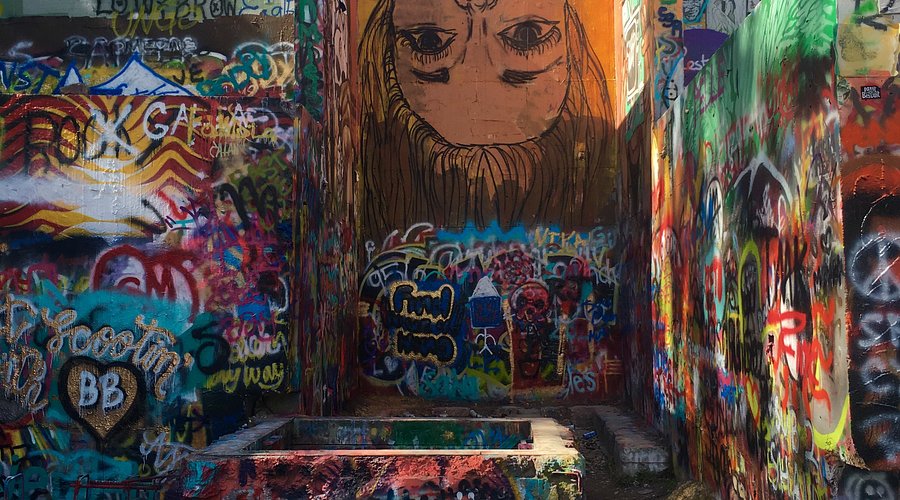
As we see today, people around the world have created graffiti, which conveys strong, expressive, and rebellious meanings through its design. Graffiti is described as unauthorized, often rapidly made, and anonymous imagery or lettering focused on self-expression, politics, and religion. Graffiti art is sometimes placed in private or public areas without the owner’s consent and is considered by some to be vandalism and a public nuisance. This has prompted cities to use aggressive anti-graffiti measures.
Some of you may be curious about where graffiti originated and what the main reason for its creation is. Graffiti originated in the dawn of time in
One movement in particular that shaped modern graffiti made a huge breakthrough in the late 1960s: Cornbread. It is the origin of modern graffiti, led by Darryl McCray. The movement gained influence and was rapidly followed by NYC’s TAKI 183. Taki 183 was one of the very first generation of writers who started highly competitive writing. Taki was a shortened version of his Greek Christian name, and 183 was his street number from subway art.
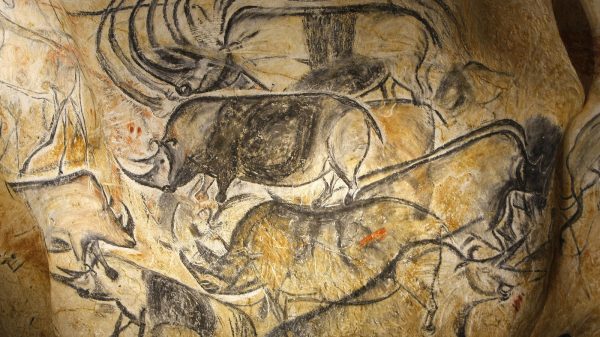
Many other early famous writers, including Futura 2000 and Phase 2 (pioneer graffiti artist), were some of the first to push creative writing. Fun fact: Futura 2000 has been doing graffiti for 50 years and is still painting til this day. Examples of cave art from 30,000 years ago were found in the Chauvet Caves in southern France, as well as in ancient Rome, Greece, and Egypt. However, modern graffiti thrived in the late 1960s and early 1970s in New York City and Philadelphia, Pennsylvania. Young teenagers and adults armed with spray paint cans began creating abstract designs and marking their names on buildings and subway cars. These artists, who considered themselves “writers,” were motivated by a desire to leave their mark on public spaces, amplify their voices in a rapidly urbanizing environment, and exercise their free will.
McCray was the first modern graffiti artist, and he also shifted graffiti from gang territory marking to personal, iconic “tagging,” influencing the rise of global hip-hop culture and nationwide street art. But did you know, in the early days of graffiti, the taggers were part of street gangs who were anxious to mark their territory. They worked in groups, as we call them till this day, crews, and called what they did writing. The term graffiti was first used by the New York Times and novelist Norman Mailer. In the early 1970’s, art galleries in New York began buying graffiti; however, at the same time that it began to be considered as a form of art, the mayor of New York, John Lindsay, declared the first graffiti war.
In the 1980’s, it became more difficult to write on subway trains without getting caught, and instead, many of the more established graffiti
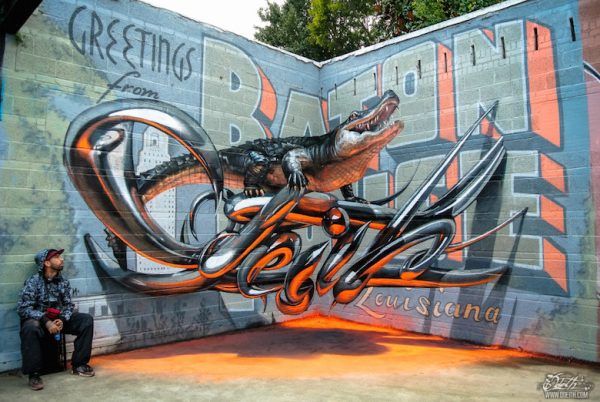
Artists began using canvases or the roofs of buildings. The controversy over whether graffiti is proclaimed to be vandalism or art, a New York City Councillor, Peter Vallone, thinks that graffiti done with consent can be an art piece, but if it is on someone else’s property is be a huge crime. He gave a message recently to graffiti vandals: Your freedom of expression ends where my property commences. A member of the Berlin-based group Reclaim Your City, Felix said that artists are retrieving cities for the public from advertisers, and that graffiti represents freedom and making cities more energetic.
The uprising of hip-hop culture in the seventies further cemented graffiti’s role as a cornerstone of urban culture. Including breakdancing, rapping, and DJing, graffiti artists provide a creative outlet for marginalized communities to express their aspirations, frustrations, and cultural influence.
Artists like Jean-Michel Basquiat helped elevate graffiti to street art status. He appeared as a DJ alongside pop star Blondie in the 1981 Rapture
music video. According to David Bellingham, Program Director of MA Art Business at Sotheby’s Institute of Art, he said the video included many references to high cultural art forms, such as positioning street art, classical ballet, and rap music alongside high art.
Tagging has evolved so much from names on abandoned buildings and walls to huge, multicolored masterpieces with thick letters, decor, outlines, etc., that become known as pieces of art.
For many decades, graffiti art has been a springboard to international fame for a few. Basquiat began spraying graffiti on the street in the 1970s,
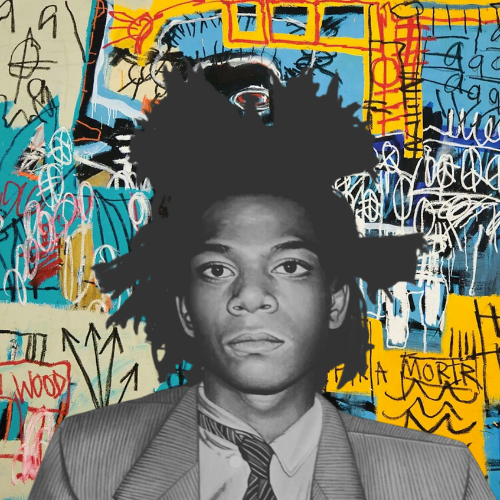
before becoming a respected artist in the eighties. The British artist, Banksy, and the Frenchman Blek le Rat have achieved international fame by producing complicated work on stencils, usually making humorous or political points. Banky’s work has been sold for millions of pounds. Graffiti art now would be considered sometimes a huge business.
The terms graffiti and street art are often used interchangeably; these forms are distinct from urban expressions. Graffiti is more focused on stylizing designs, symbols, tags, or letters. This emphasizes the artist’s appearance or crew affiliation. It employs paint markers or spray paint to prioritize placement and visibility. On the other hand, street art encompasses a broader range of visual expressions, including stencils, wheatpaste posters, murals, and even installations. Street art aims to engage with the public on political, social, or symbolic themes, sometimes with the property owner’s permission, and a graffiti artist, too.
Despite its outlaw situation, graffiti began to gain popularity as a legitimate art form when art galleries and collectors took inspiration from the cornbread movement. Pioneers like Keith Haring and Basquiat transitioned from the streets to the world, blending contemporary art practices with graffiti aesthetics. This shift has highlighted the cultural significance of graffiti art and challenged traditional notions of art. According to Bellingham, Keith Haring also pioneered the commodification of graffiti art and street art through affordable everyday utilitarian objects like sketchbooks, pencil cases, and colored pencils. For street art, these objects subvert the high-finance yearnings of the art market.
Haring became popular in the 1980’s who brought street art into mainstream consciousness. His graphic and bold style featured motifs such as
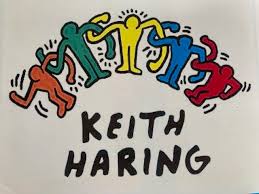
barking dogs, radiant babies, and dancing figures; he just made his own recognizable art piece. Which is very talented and neat of him. Keith Haring found beauty and inspiration in the graffiti style on the side of New York City subway cars and looming above him on bridges and buildings. Haring began doing chalk drawings on unused advertising panels in the subway, turning these spaces into public art galleries accessible to everyone.
He used art as a medium for activism, and his sketches were often addressed to issues such as apartheid, LGBTQ+ rights, and AIDs awareness. Haring, like multiple other artists, used his platform to advocate for change, creating artworks and murals in collaboration with his own community and eventually with communities around the world.
Before we had phones or any other technology we have today, graffiti writers had pen-pals with whom they exchanged photos and sketches of street art in their local area. When Subway Art was published in 1984 by Henry Chalfant and Martha Cooper, the scene of street art exploded quickly around the globe. In 1987, James Prigoff and Henry Chalfant went on to publish Spray Can Art, which was equally as famous. Writers nationwide are really good at writing their names and publicity. However, some graffiti champions do so much to spread their art form and the work of local writers globally.
Over time, graffiti art has really inspired artists nationwide, with its bold visuals and raw motivation becoming symbols of urban creativity.
Sources: https://90degrees, https://sothebysinstitute.com, https://learnenglishteens.britishcouncil.org