You probably did MAP testing at least one point in school, most likely three times. Have you ever prepared for a test like this? Well, time to tell you the history and what MAP testing is.
For those who don’t know, according to Think Academy, “MAP stands for Measures of Academic Progress, and there are actually two types of MAP assessments: MAP Growth and MAP Reading Fluency, both of which were developed by NWEA”.
“MAP Growth is a test that shows your level in math, reading, writing, and sometimes science. When a student takes this test, the RIT scores it uses allow the schools that administer it to track students’ progress. The MAP Reading Fluency, however, is more focused on the reading aspect of you; what the MAP Reading Fluency will test is your reading accuracy, word recognition, phonics, and oral reading fluency. These tests determine whether students are fluent in reading or not”.
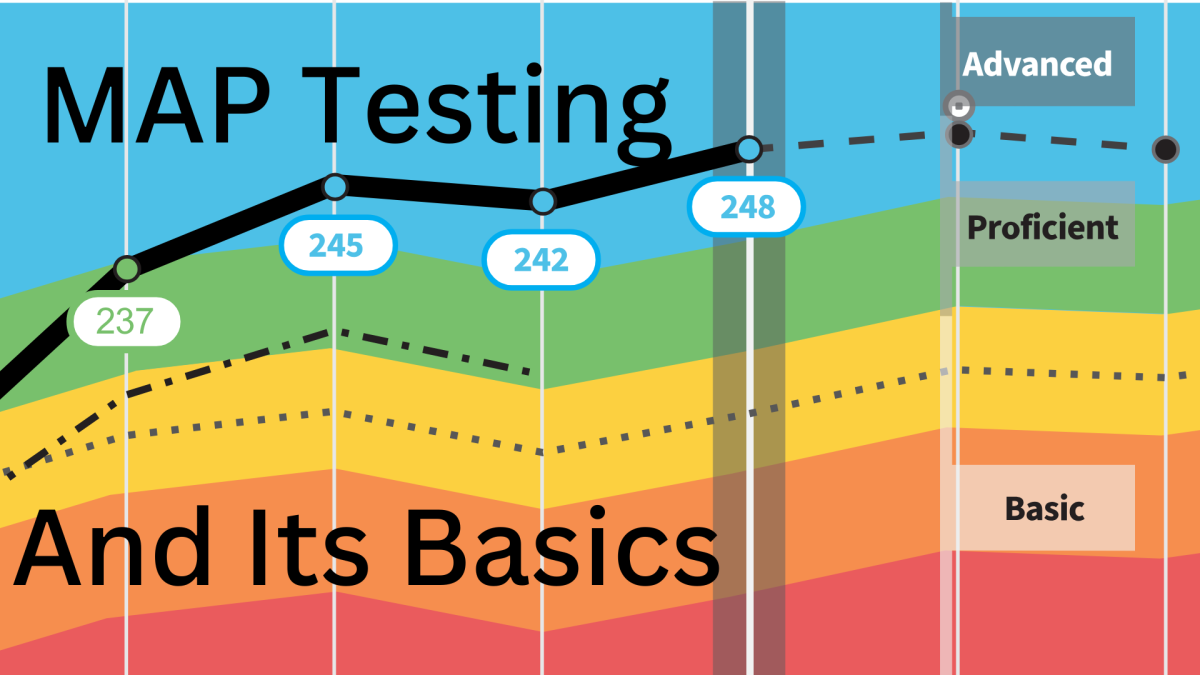
Now that you know a few things about MAP, let’s tell you about what to do when you take them. According to the reading teacher, Mrs. Roman, we take them three times a year because it is the most accurate way to see growth over time. She also talks about the colors, saying that “the RIT scores fall in bands of colors based on our percentile to age, which are red, orange, yellow, green, and blue.”
Now that you know all the other stuff about MAP testing, let’s talk about the thing everyone wants to know about: why do we take MAP testing? Well, according to the Missouri State Board of Education. “The purpose of MAP testing is to identify students’ strengths and weaknesses.”
As you can see, MAP testing may seem boring at the time, but it actually is very useful to understand student progress. So the next time you see or do a MAP test, don’t stress because you can do your best and get great scores.
https://www.thethinkacademy.com/blog/what-is-the-map-test-a-parent-friendly-guide-to-map-growth/