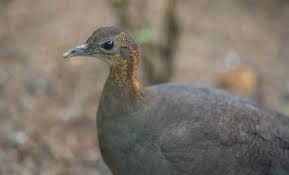
A rare bird species has been discovered in Brazil called the slaty-masked tinamou (there is also a slaty-breasted tinamou, they both come from the same family, but are not the same). It is endangered, and scientists worry that it could share the same fate as the Dodo bird. The bird actually was extinct since the 17th century, but it came back recently this year in the mountains. This is the first time in 75 years that a new species of the tinamou has been discovered. Like the Dodo, the slaty-masked tinamou does not show fear of anything, including humans, but it is smaller than the Dodo, and scientist Luis Morais says that “It shares a similar behavior of the Dodo.” Sadly, though, since these birds are endangered, human activity is mostly the reason for the birds’ population decline. These birds are being hunted, and they are soon building a highway near one of the bird’s habitats. The bird was first discovered in 2021, but was not made public until 2025. The bird can also produce a call that sounds like a tinamou, and when the scientists hear the sound, they said, “The bird’s vocalization exhibited pronounced diffusion within the forest understory, often misleading the observer’s perception of the sound’s distance and direction.” Then in November 2024, they play back the audio and clarify that it is part of the tinamou family. The bird has problems when it comes to being endangered because multiple environments they live in can be destroyed, polluted, lose their main food source, or worse. They are also endangered themselves of being extinct by being hunted and eaten, chemicals in their area, other predators eating them, climate change, or other potential threats. So the scientists have every right to worry here, but that doesn’t mean they can’t be saved. If they moved them to a different habitat, gave them the food they need, and found two slat-masked tinamou so that they can breed. Not much is known about the slaty-masked tinamou, but a similar species, the slaty-breasted tinamou shows proof that a male may mate with 2–4 females, and a female can lay 2–3 eggs in a season. And after all of that, they have to lay 1–12 eggs, and then the eggs will hatch in 16 days. So I think it’s safe to say that the scientists have a chance to save these birds only if they keep the birds safe and make sure they decrease deforestation, pollution, and make laws to protect these birds.
A Rare Bird Just Discovered – But It’s Already Facing the Same Risks as the Dodo
Story continues below advertisement