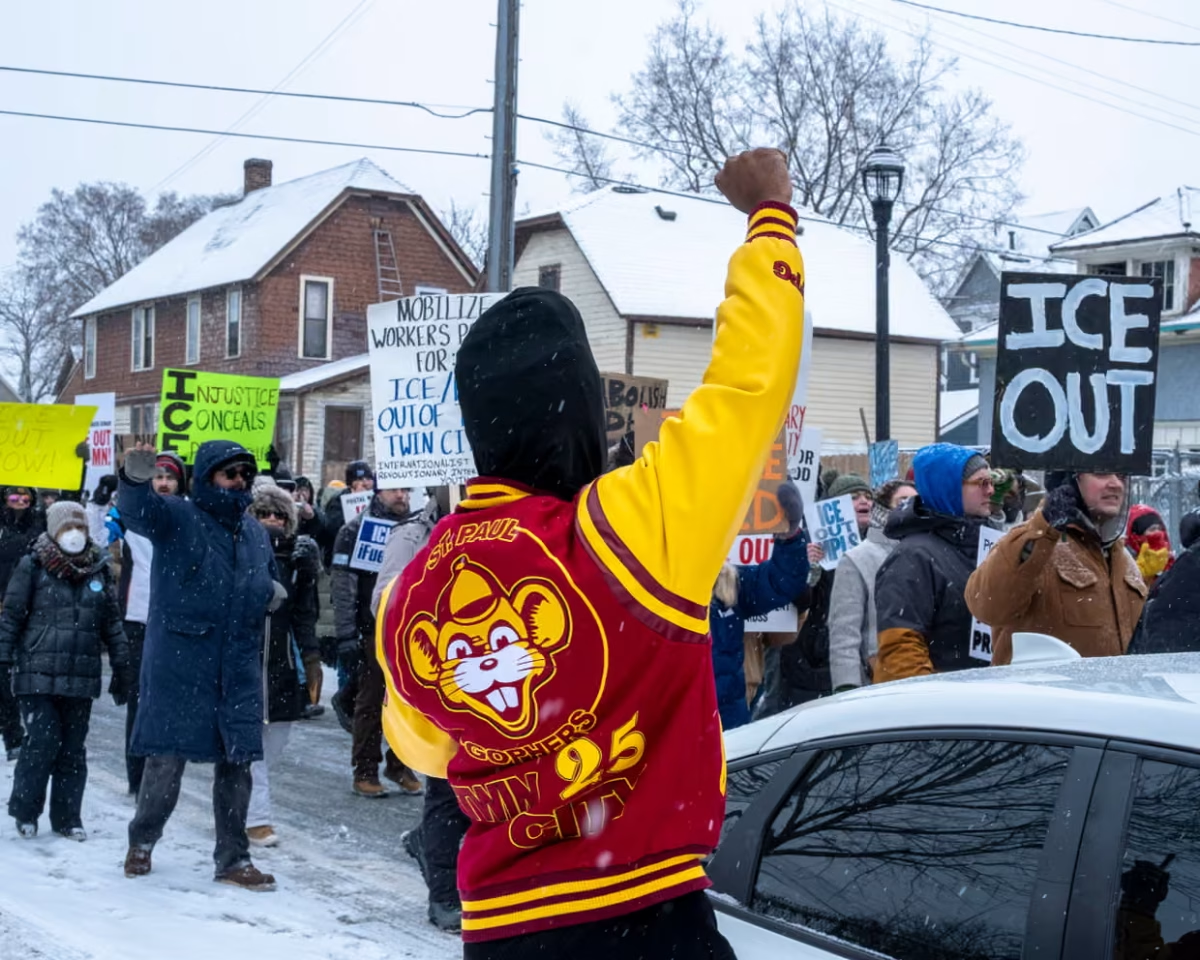

The Trump Administration has asked the Supreme Court to let them deploy the National Guard to Chicago, Illinois, last Wednesday, amid President Donald Trump’s push to send the military into Democratic-led locations. The Supreme Court last Wednesday took a very rare step of requesting additional briefing in a very high-profile, emergency case challenging President Trump’s deployment of the National Guard in Chicago. The Justice Department filed an Emergency application at the high court last Friday, requesting that the justices halt a judge’s order that would block Trump from sending hundreds of National Guard members into Illinois.
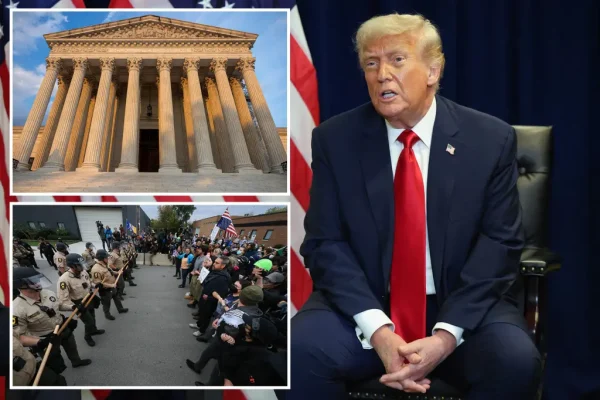
The Justices command the components of the state of Illinois and the city of Chicago, especially Trump’s Justice Department, to file written briefs by November 10 answering the questions of what the words “regular forces” in the law mean, well, what that means is a country’s full-time, professional military personnel who serve under a long-term, legally binding contract. The federal law was issued to allow the president to deploy the National Guard to suppress a rebellion or, if he is unable to cooperate with the regular forces, to execute the laws of the United States. A federal court in early October blocked the administration’s deployment, and in a signal that the Supreme Court isn’t in a hurry to rule, the justices indicated that they won’t decide the case until November 17. According to the White House, National Guard troops need to be deployed because the federal officials have been unable to execute the immigration law with “regular forces”, creating a rarely used statute known as Title 10. The Justices want to know if the “regular force” would refer to the U.S. Military, not federal authorities, as Mr. Trump suggested.
For some of you who don’t know what Title 10 is, well, it is a federalized status of the National Guard, which means that the National Guard is under the command of the President of the United States and is also funded by the federal government for federal tasks; for instance, domestic emergencies like natural disasters that overwhelms the state and any local forces or overseas deployments. This status would differ from the usual state-level dominance, where a governor allows the National Guard to be under a state’s authority. Last week, a law professor at Georgetown University, Martin Lederman, suggested that Donald Trump hadn’t met the Title 10’s qualifications in a summary before the court. Lederman said that the government clearly restricted regular forces within Mr. Trump’s emergency application, such as Civilian Federal Law
Enforcement agencies like Federal Protective Service (FPS) and Immigration and Customs Enforcement (ICE).
The new question for President Trump may be a bad sign in this case: his lawyers argued that, under a 1827 precedent, courts don’t typically have jurisdiction to review a president’s decision to call up the troops. On the other hand, the justices appear to be challenging one of the Trump Administration’s more nuanced justifications for the deployment. A jurisdiction is where a court can legally have the authority to hear and decide the case. However, it can be determined by the factor for the type of case (subject basis), the property or people involved (personal), and the geographic location or area (territorial). For a court to have the ability to start a jurisdiction, it requires to have personal jurisdiction over the individuals that are involved in the case and for subject matter jurisdiction over the case’s problem. Every level in the government is different, like the state and federal governments, which also have their own particular jurisdictional boundaries.
John. D Sauer, Solicitor General, wrote in the Trump Administration’s request to the justices, which said that the Supreme Court should remain in the district court’s October 9 injunction in its entirety, the injunction erroneously impinges on President Trump’s authority and unnecessarily endangers federal property and personnel. This marked the first time the justices have been asked to weigh in on Trump’s use of the National Guard on any U.S. soil. John Sauer noted that the case shows an irritating and recurring pattern with the federal officers seeking to enforce immigration law, which has been done with “coordinated, prolonged, and violent resistance.”
In response to the president’s emergency petition of the lower court block, from last Wednesday, Amy Coney Barrett, a Supreme Court Justice member, referred a question to the full court on the language of the statute of Trump, invoking calling up to 300 troops of the Illinois Guard into federal service for deployment in early October in Chicago. Additionally, with the Illinois Guard, Mr. Trump attempted to send federalized
authorities of the Texas Guard to Chicago. Barrett asked the full court to consider whether the term “regular forces” in the statute relates to the regular forces of the U.S. Military, such as members of the Air Force, Navy, and Army. Amy Barrett’s referral of the question was completely unexpected, as the cities and states are challenging the President’s military deployments, and are involved with the Department of Justice (DOJ) representatives defending them. Generally, it hasn’t surfaced whether the normal armed forces should be considered part of the “regular force”, referring to the statute. Some political parties were involved in the lawsuits, especially the Trump Administration, which has instead mostly interpreted that to refer to federal law enforcement personnel executing federal policies, such as Immigration and Customs Enforcement (ICE) and FBI agents.
Legal analyst and professor at the Georgetown University Center, Steve Vladeck, said that we can’t know for sure if this order is a really bad sign for President Trump, there wouldn’t be any need for the Supreme Court to ask the parties to address this justifying question if the 5 justices had already agreed to vote for the federal government on one of the other 2 possible grounds. The orders were addressed to multiple courts, which have been reviewing the deployments to other cities, most notably, Portland, Oregon. John D. Sauer wrote that there was a pattern contending with the National Guard that first began in Los Angeles, which was the first city that the National Guard was sent to. In that case, it was said last week by the full 9th US Circuit Court of Appeals that it will re-review a decision in the President’s favor. The District Court issued an opinion granting a commandment in relief against Trump’s actions, which de-emphasizes or denies the ongoing threat to the lives and safety of federal agents. This substitutes the court’s own judgment for Donald Trump’s need for military augmentation, and gives little or no weight to the United States’ interest in enforcing federal immigration law.
Local leaders have emphatically declined the Trump Administration’s depiction of the crime scene in the ground of cities where the President has sought to send in troops, while he wrote in court papers that protests have been small and largely peaceful. Additionally, the National Guard troops were also sent to Washington, D.C. It can be concluded that sending in troops would ease this “out-of-control” violent crime, as President Donald Trump recalled, and protect federal immigration enforcement efforts.
Source: https://www.cnn.com, https://thehill.com, https://www.democracydocket.com, https://www.reuters.com, https://www.courthousenews.com